
One platform. Multiple businesses. One system underneath.
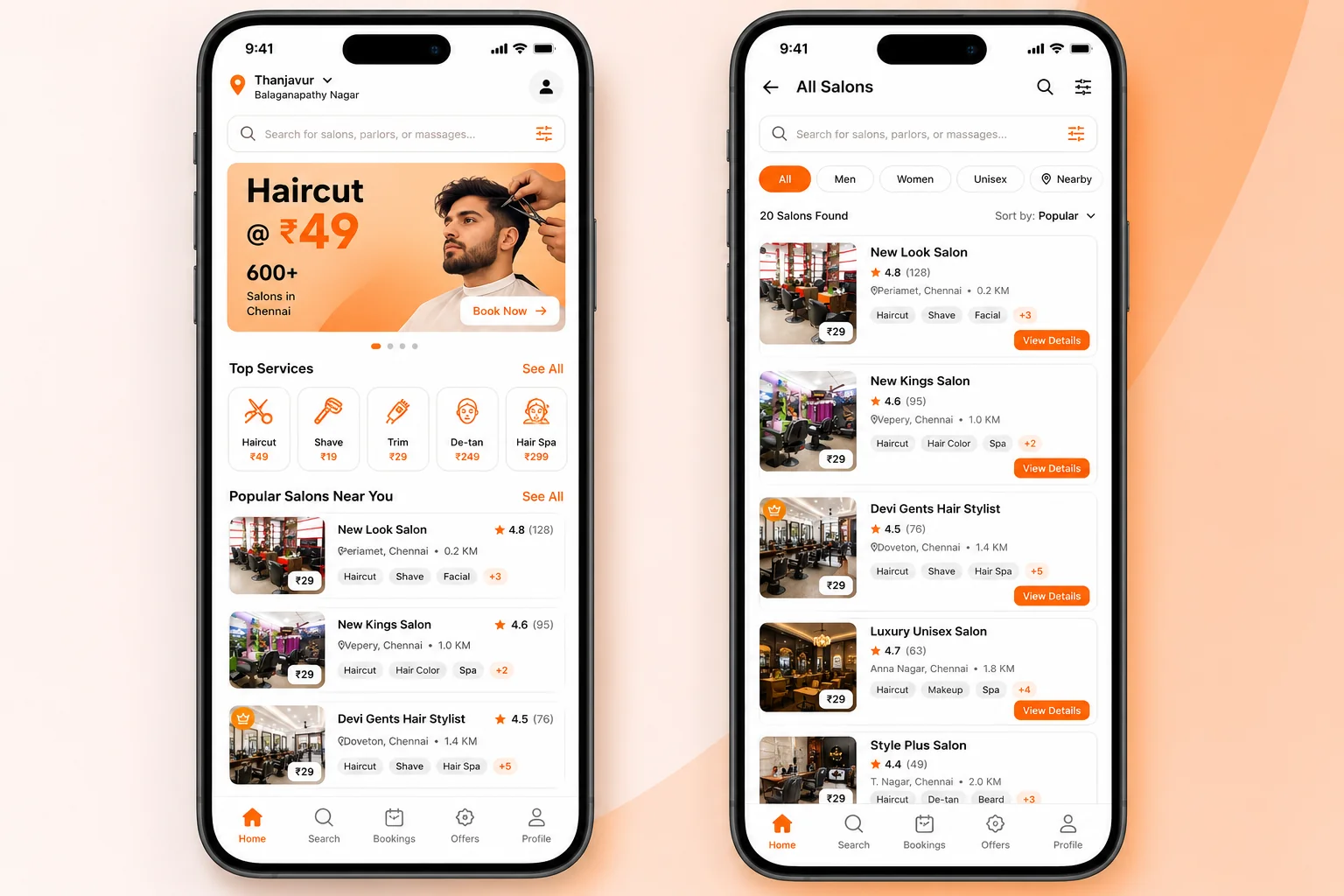
Gloup is a salon management platform designed to help multiple salon chains and branch locations operate through a centralized operational system without cross-tenant data leaks.
The Context
Running a single salon location is straightforward: a local database, appointment schedules, inventory, and staff rosters. But salon chains don't operate as disconnected islands. Franchise owners need unified financial reporting, while individual store managers must never see customer data, commission payouts, or inventory numbers from other branches.
The initial inclination for many teams is either to deploy separate database instances per location (expensive, impossible to maintain) or write ad-hoc WHERE location_id = ? filters in every application query (dangerous and vulnerable to human error).
Salon B ── Database B
Salon C ── Database C
Result: Zero unified view
┌─────────┼─────────┐
Salon A Salon B Salon C
Atomic Isolation · Centralized Ops
The Engineering Problem
The interesting part was the boundary.
The problem wasn't simply handling concurrent appointments on a busy Saturday. It was the boundary between tenant isolation and cross-tenant aggregation.
Store managers needed lightning-fast schedule changes without lock contention on the global table. Concurrently, regional directors needed real-time performance rollups across 40+ locations without triggering full-table locks that froze checkout terminals.
We had to guarantee that even if an engineer forgot to write a tenant filter on a new API route, the underlying data layer would make cross-tenant data leakage structurally impossible.
What Tenlyr Did
Rather than wrapping existing code in band-aids, we restructured the core foundations:
Tenant Context Middleware
Every authenticated request is injected with cryptographic tenant context at the edge. The database connection automatically inherits tenant schemas without developer friction.
Row-Level Security & Scopes
Database-level Row Level Security policies guarantee isolation even in raw analytical queries. No developer can accidentally expose another salon's client records.
Asynchronous Cross-Tenant Aggregation
Decoupled regional rollup reporting from operational transactional workloads using event streaming. Franchise dashboards update in sub-second time without table locks.
Role-Based Access Hierarchy
Granular RBAC allowing franchise owners to delegate staff permissions, audit pricing changes, and manage inventory transfers between branches with a single click.
The Result
One single platform operating reliably across multiple salon chains.
Gloup expanded to onboard multiple commercial salon chains without requiring infrastructure redesigns or dedicated database instances for new enterprise clients.
Branch managers get immediate sub-50ms local appointment booking, while franchise headquarters receive real-time financial rollups with zero database performance degradation.
What We Learned: Multi-tenancy isn't just a database decision.
Many teams treat multi-tenancy as an afterthought: "we'll just add an organization_id column." In reality, multi-tenancy ripples through every single layer—how background jobs are scheduled, how caches are partitioned, how migrations are tested, and how webhooks are retried. Designing the boundary upfront saves hundreds of thousands of dollars in emergency database rewrites.
Have a system that's getting harder to change?
Tell us what's happening. You'll talk directly to Rajesh without sales handoffs.